Trust, But Verify: A Bettor's Walkthrough of On-Chain Plinko Fairness Checks
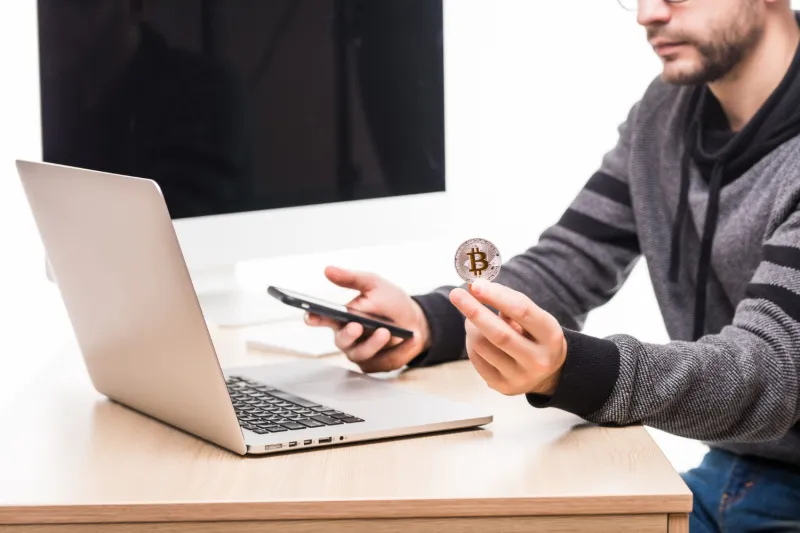
Photo: person verifying cryptocurrency transaction on laptop screen close up, via cybersecurityasia.net
Let's be honest: most of us click 'Bet' on a Plinko board without giving a single thought to what happens under the hood. The ball drops, the multiplier hits, and we move on. But if you're betting crypto from the US—where these platforms operate in a legal gray zone at best—verification isn't optional. It's your only real consumer protection.
The good news? Checking a Plinko drop for fairness takes about 30 seconds once you know what you're doing. Here's the full breakdown.
The Core Idea: The Casino Can't Change the Outcome After the Fact
Provably fair systems work on a simple cryptographic trick. Before you place a bet, the casino generates a server seed and gives you its SHA-256 hash—a scrambled fingerprint of that seed. You also contribute your own client seed, which you can edit anytime.
When the bet settles, the casino reveals the original server seed. You hash it yourself. If it matches the fingerprint they showed you earlier, they couldn't have swapped in a different seed after seeing your bets. The outcome was locked in before the ball ever dropped.
Think of it like a sealed envelope at a poker table. The dealer writes the result down, seals it, and hands you the envelope before the hand starts. If the seal's unbroken at the end, nobody cheated.
Step-by-Step: Verifying a Drop on Stake
Stake's implementation is the one most other sites copy, so we'll use it as the template.
- Open your bet history. Click any resolved Plinko bet and look for the 'Verify' or 'Fairness' tab.
- Grab the revealed server seed. Stake exposes the unhashed seed once the bet is complete.
- Check the rotation. In Stake's fairness settings, you can rotate your client seed. Do this regularly—rotating forces the casino to reveal the old server seed, letting you audit a whole batch of past bets at once.
- Run the math. The result is computed as HMAC-SHA256(server seed, client seed:nonce), where the nonce is your bet number under that seed pair. Stake shows you this calculation inline, but you can paste the values into a third-party verifier like a community-built seed checker if you want independent confirmation.
- Compare the outcome. The first bytes of the hash output map to the row-by-row bounce direction of the ball. If the computed path matches what you saw, that drop was legit.
The BC.Game Variation
BC.Game uses a similar seed-pair model but adds a crypted hash chain—each server seed's hash contains the hash of the next one, creating an audit trail. The verification flow is nearly identical: pull the revealed seed, run it through their built-in checker (found under the 'Fair' menu), and confirm the hash chain hasn't been broken. If you're the type who likes spreadsheets, BC.Game also lets you bulk-verify sessions, which is handy after a long Plinko grind.
Red Flags: When a Plinko Game Might Be Rigged
No system is foolproof, and shady operators count on players never checking. Watch for these warning signs:
- No seed rotation option. If you can't change your client seed, you can't force a reveal. That's a dealbreaker.
- Vague or missing fairness documentation. Legit platforms publish the exact formula. If a site just slaps a 'provably fair' badge on the lobby with no explainer, be skeptical.
- Verification that only works through their own tool. Closed-source verifiers mean you're trusting the casino to grade its own homework. Look for games where third-party checkers can reproduce results.
- Server seeds that never get revealed. If rotating your seed doesn't produce the old server seed, walk away.
- House edge that isn't disclosed. Reputable Plinko games publish their edge (typically 1% on Stake, for example). Hidden edges are a classic rigged-game tell.
A Quick Reality Check
Verification proves the math was honest—it doesn't make Plinko a winning game. The house edge is baked into the multiplier table, and no seed pair changes that. What verification does is guarantee you're playing the advertised game, not a doctored version of it.
For US players especially, that matters. You're not getting state gaming commission oversight like you would at a Vegas-adjacent sportsbook. The blockchain's transparency is the regulator here—use it.
Rotate your seeds, spot-check your big losses, and treat any casino that resists verification like the red flag it is.