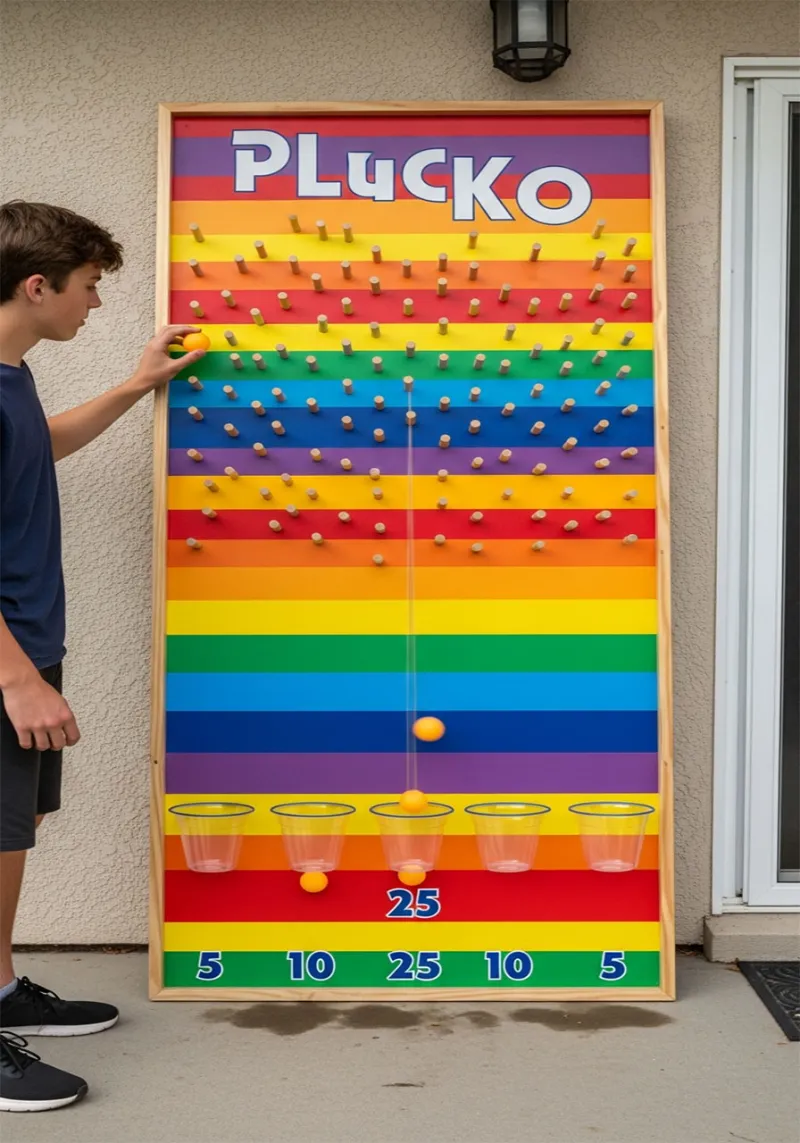
Every Peg Is a Decision: How Casino Math Hides Inside the Plinko Board
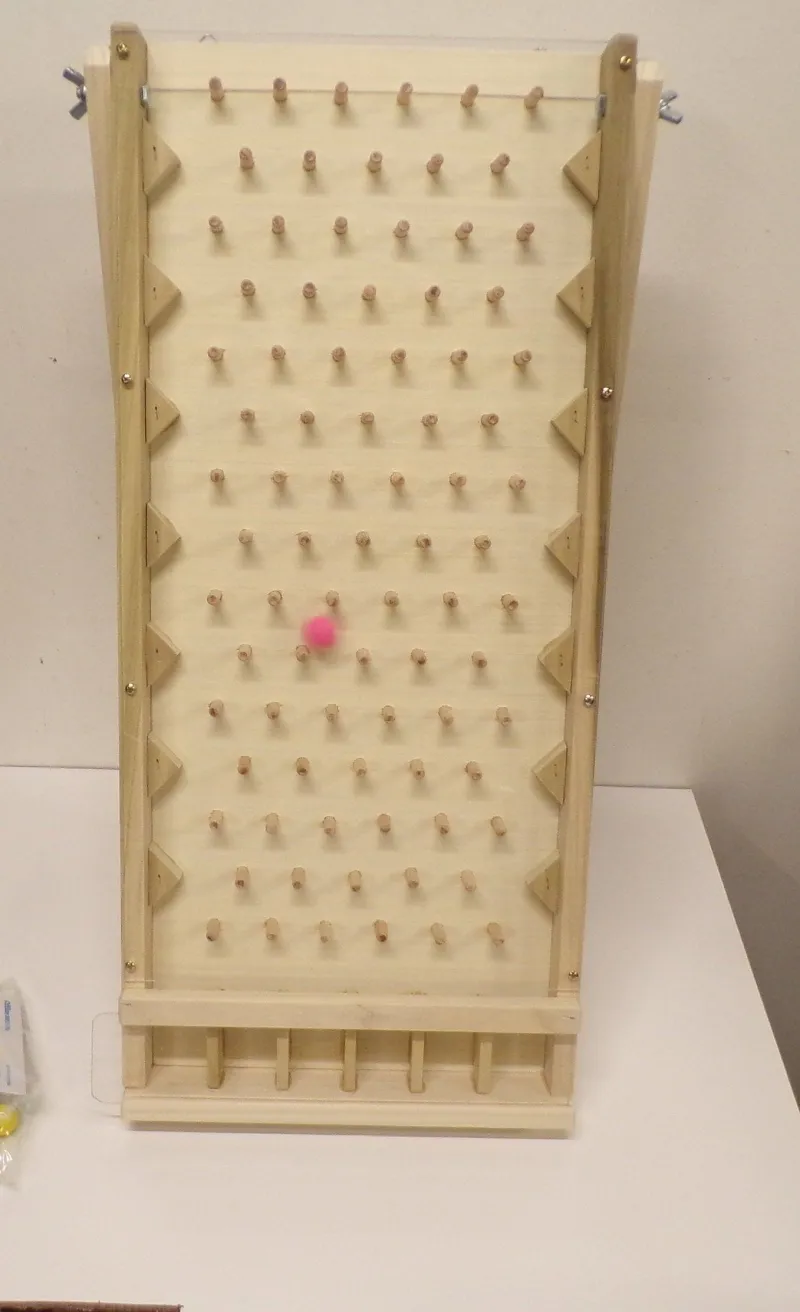
Photo: plinko board pegs ball drop casino game close up, via i.pinimg.com
Most Plinko players treat the board like a slot machine with better vibes. You pick a risk level, hit drop, and watch the ball do its chaotic little dance. But here's the thing nobody puts on the homepage: before you ever touched that board, the casino made a series of design decisions that determine, mathematically, how much of your money they expect to keep.
Peg layout, row count, and edge multipliers aren't cosmetic. They're the entire business model. And the gap between a well-configured board and a greedy one can be the difference between a house edge under 1% and one north of 5% — the same game, five times the tax.
The Board Isn't Random. The Board Is the Rake.
Start with the physics-that-isn't-physics. In a real Galton board, balls fall through pegs and pile into a bell curve. Crypto Plinko doesn't simulate that — it uses a provably fair random number generator to pick your landing slot directly, then dresses it up with pegs for show. The pegs are theater. The payout table is the actual game.
That matters because the casino controls two levers:
- How the ball lands. More rows mean a tighter bell curve — the ball clusters harder in the center slots and visits the edges less often.
- What landing pays. The multiplier assigned to each slot, especially the extreme edges.
Squeeze those two levers in the casino's favor and the house edge balloons. Stretch them out and you get some of the fairest odds in online gambling.
Rows: The Invisible Difficulty Setting
Here's the part that trips up even experienced bettors. High-risk Plinko pays big on the edges — we're talking 100x, 500x, sometimes 1,000x on the outermost slots. Sounds great. But at 16 rows, the probability of hitting that outermost slot is roughly 1 in 65,536. At just 8 rows, it's 1 in 256.
Same flashy multiplier. Wildly different odds.
So when you compare two casinos both advertising a "1,000x edge hit," you're not comparing the same game. One might pay it once every few hundred drops; the other, once in a blue moon. The row count is doing all the work, and it's usually buried in a settings dropdown you've never opened.
Quick rule: more rows = flatter distribution = the edges get exponentially rarer. If a casino lets you choose row count, that's a feature, not a bug — it means you control the volatility dial.
The Payout Table Is the Contract. Read It.
Every reputable crypto casino publishes its full multiplier table. Most players scroll past it. That's a mistake, because the payout table tells you everything: how much the center slots bleed (usually 0.2x to 0.9x), how fat the middle-high slots are, and how generous the edges really are relative to their rarity.
A tight, fair board tends to look like this:
| Board Style | Typical House Edge | What It Feels Like |
|---|---|---|
| Player-friendly (e.g., well-tuned 16-row high risk) | ~0.8–1% | Long sessions, brutal variance, math on your side |
| Industry standard | ~1–2% | Normal casino grind |
| Sloppy or greedy config | ~3–5%+ | Bankroll evaporates faster than the graphics suggest |
You don't need to compute expected value by hand for every slot. Two shortcuts do most of the work:
- Check the center bleed. If the middle slots pay 0.2x across five or six slots, the board is vacuuming your bets on the majority of drops. A 0.5x or 0.6x center is meaningfully friendlier.
- Compare edge multipliers to row count. A 1,000x edge on a 16-row board is worth far less than 100x on an 8-row board. Do the rough probability math before you fall in love with a big number.
A Two-Minute Checklist Before Your First Drop
- Open the payout table. Screenshot it. Seriously.
- Note the row count and whether it's adjustable. Adjustable is a green flag.
- Look up the stated house edge. Legit casinos publish it. If it's nowhere to be found, treat that as a data point.
- Compare against a known-good reference. If a site's high-risk board pays dramatically less on the edges than the major platforms for the same row count, you've found the markup.
- Verify provable fairness is actually offered. A pretty board with no verifiable RNG is just a slot machine wearing a Plinko costume.
Why This Should Matter to US Players
Americans playing on offshore crypto casinos don't have a state gaming commission looking over the operator's shoulder. There's no audited RTP filing, no regulator forcing disclosure. The payout table and the fairness verification tools are your regulation. If you're going to play Plinko from the US, reading the board config isn't optional homework — it's the only consumer protection on the table.
The good news: the information is right there. Plinko is one of the most transparent casino games ever built, if you bother to look. The math isn't hidden. It's just written in a language most players never learn.
Learn it, and you'll never look at a peg board the same way again. Every row, every multiplier, every 0.2x center slot is a decision somebody made about your money. Make sure you know what they decided before the first ball drops.