Why Your Crypto Bankroll Dies on the Edge: Plinko Bet Sizing That Actually Lasts
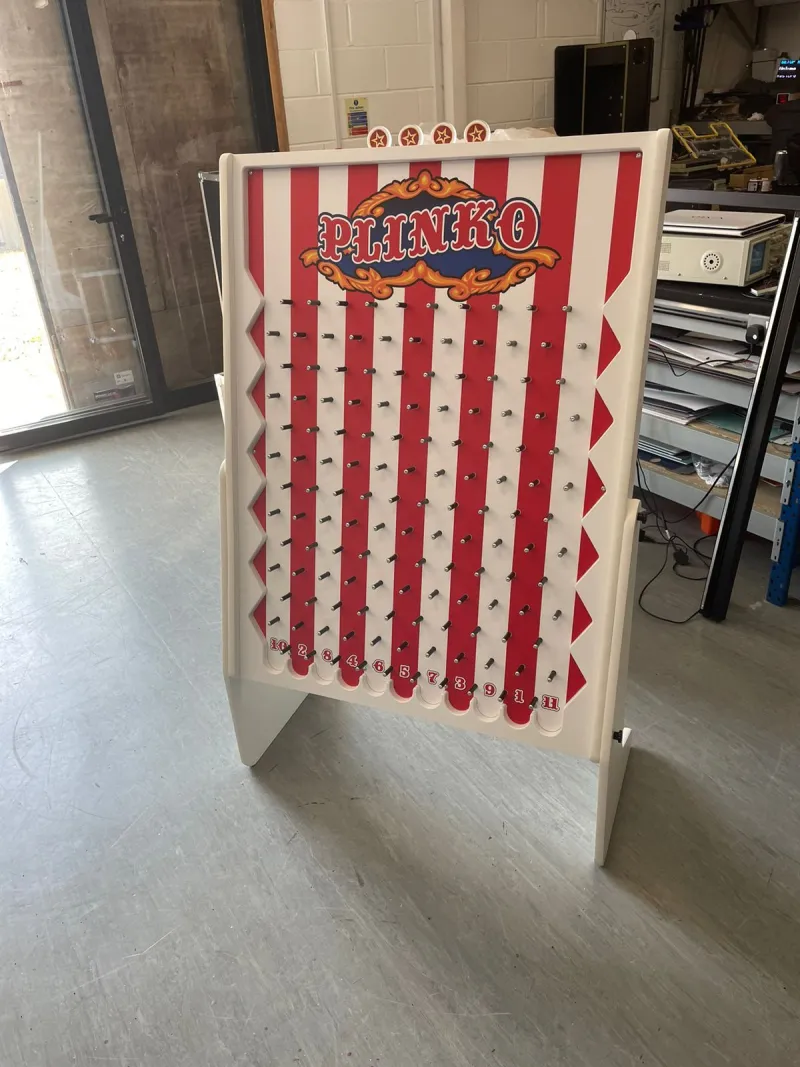
Photo: plinko game board pegs ball drop casino, via www.funprouk.co.uk
Every Plinko player has been there. You drop 50 balls in a row at 16 rows, high risk, and watch your BTC balance bleed down ball by ball. Then you switch to low risk, and it takes an hour to win back what you lost in five minutes. That's not bad luck — that's bad bankroll math.
Plinko's payout structure is one of the most extreme variance machines in any crypto casino, and most players treat it like it's a coin flip. It isn't. Let's break down how to actually size your bets so the board doesn't eat you alive.
Know Which Game You're Actually Playing
The single biggest mistake Plinko players make is treating all configurations the same. They are wildly different animals:
- Low risk, 8-12 rows: You're playing a slow drip game. Payouts cluster near 1x-2x, losses are small, and your bankroll decays mostly through house edge, not variance.
- High risk, 16 rows: The edges pay 100x, 500x, sometimes 1,000x. But the vast majority of balls land in the middle at 0.2x-0.9x. You're buying lottery tickets with a slow bleed attached.
The bankroll math for each is completely different, and using the same bet sizing for both is how players go bust.
The Center-Drop Budget: Slow Grind, Small Bets
If you're playing low-volatility configs — the stuff that lands in the middle rows and pays out modestly — your risk of ruin comes almost entirely from the house edge. Variance is low, so your bankroll behaves like a car with a slow leak.
For this style, you can afford a larger bet size relative to your bankroll because the swings are tame. A reasonable rule of thumb:
Bet 1-2% of your bankroll per drop.
If you're rolling 0.05 ETH, that's drops between 0.0005 and 0.001 ETH. At that sizing, a cold streak of 30 or 40 balls won't wipe you out — you'll just grind through it and catch the next warm patch. This is the Plinko equivalent of playing nickel slots: boring, sustainable, and it keeps you at the board for hours.
The Edge-Hunt Budget: Lottery Tickets Need Lottery Math
Now flip it. You're at 16 rows, high risk, chasing that 1,000x corner pocket. Here's the uncomfortable truth: at most Plinko configurations, the edge pockets hit roughly 1-2% of the time or less, depending on the provably fair RNG setup.
That means a realistic session might involve 100+ drops between meaningful hits. If your bet size is even 1% of your bankroll, you can be down 50% before your first big pocket lands — and that's if it lands.
For edge-hunting, flip the ratio:
Bet 0.25-0.5% of your bankroll per drop.
Yes, it feels painfully small. That's the point. You're buying tickets to a distribution where most outcomes lose money, and your bankroll has to survive long enough for the tail to pay you. Think of it like buying scratch-offs: nobody puts their rent money in scratch-offs, and nobody should put 5% of their roll on a single high-risk Plinko drop either.
The 20-Ball Test: A Quick Sanity Check
Here's a gut-check we use before any session. Take your planned bet size and simulate the worst realistic stretch: 20 consecutive middle-pocket losses at whatever multiplier your config pays there.
- Low risk, 12 rows: 20 losses at ~0.5x means you lose roughly 10% of your staked amount. Fine.
- High risk, 16 rows: 20 losses at ~0.2x means you've burned through a chunk of roll with zero hits to show for it. Still fine if your bet sizing passed the 0.5% test.
If a 20-ball cold streak would take more than 25% of your bankroll, your bets are too big. Shrink them until they aren't.
Stop-Loss Discipline: The Part Everyone Ignores
Bankroll management isn't just sizing — it's knowing when the session is over. Two rules that actually work:
The 30% session stop. If you're down 30% of the bankroll you allocated for the session, close the tab. Not after one more drop. Not after you "win it back." Chasing losses on a high-variance board is the fastest way to turn a bad night into a blown wallet.
The profit lock. If you hit a big edge pocket — that 300x or 500x moment — immediately move 50% of the winnings to a separate wallet or exchange account. The single most common way Plinko players give back a jackpot is dropping it all back into the board at higher stakes. The casino's edge doesn't take nights off, and neither does variance.
Crypto-Specific Notes for US Players
A few practical points that only apply when you're playing with Bitcoin, ETH, or USDT:
- Volatility cuts both ways. If you're bankrolled in BTC and it pumps 10% during your session, your real-world bankroll grew even if your coin count didn't. Factor that in if you're tracking USD results.
- Gas and withdrawal fees matter at small bankrolls. If you're playing with $100 worth of crypto, network fees on withdrawal can eat a real percentage. Use chains with low fees (Lightning, TRON, Solana-based casinos) for small rolls.
- Stablecoins simplify the math. If your bankroll is in USDT or USDC, your bet sizing percentages map directly to dollar amounts, which makes discipline easier to enforce.
The Bottom Line
Plinko doesn't reward courage — it rewards math. Small bets on high-variance configs, slightly larger bets on low-variance ones, hard stop-losses, and profit locks. Do those four things and you'll outlast 90% of the players at the board. Ignore them, and the edge pockets will stay just out of reach while your balance does the falling.